

Why Mini-Games Are a Key Mechanic in Today’s Biggest Games
 5
5
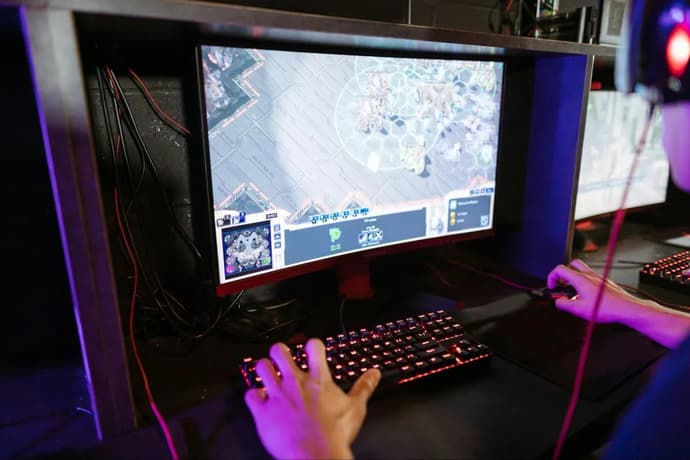
You know that familiar moment when you sit down with a massive RPG, fully intending to push the main story forward, only to find yourself hours later deep into a card game, a fishing challenge, or managing some surprisingly complex side system that has nothing to do with saving the world, and yet feels just as compelling. That’s not you getting distracted. That’s the game doing exactly what it was designed to do.
Mini-games have evolved from simple side quests into one of the most powerful design tools in modern gaming, shaping how players engage.
Mini-Games Create Breathing Room for Players
Modern games have long scenarios with open worlds or narratives that require a significant time investment, and while this seems impressive, it also comes with a real challenge that developers have to solve carefully.
Player fatigue.
Spending hours doing the same type of activity, even if it is well designed, can slowly wear down engagement, and this is where mini-games step in to experience the shift.
You move from combat to a small challenge, or exploration to a puzzle game, and it helps. Research into player engagement consistently shows that varied interaction loops help maintain attention and reduce burnout, especially in long-form games.
The Hidden Role of Mini-Games
If you strip modern game design down to its core priorities, one goal sits above almost everything else.
Keeping players engaged over time.
Mini-games are exceptionally good at this, because they are not complex, structured around low commitment and immediate satisfaction. These games are short enough to fit into any session and rewarding enough to make you feel like your time was well spent, even if you only played for a few minutes.
Gamification research shows that short gameplay loops combined with rewards, progression, and light competition significantly increase repeat engagement, with some implementations dramatically extending session duration compared to more traditional, linear interactions. It is the same principle that made mobile games so dominant, now refined and embedded into larger, more complex experiences. No wonder why instant games are exploding in popularity, with the global market reaching nearly $3.95 billion in 2026 and continuing to grow rapidly.
Big Games, Small Systems
You can see this design philosophy clearly across some of the most recognizable titles of the past decade.
In The Witcher 3: Wild Hunt, Gwent began as a modest in-world card game, something you could easily ignore, yet it quickly became one of the most beloved parts of the experience, eventually growing into a standalone title because players kept returning to it for its tight, satisfying loop.
Grand Theft Auto V also scatters mini-games across its world in a way that makes the environment feel alive, offering everything from sports activities to economic simulations, each one acting as a small invitation to stay engaged even when the main story is not your focus.
Then there is Yakuza: Like a Dragon, which leans so heavily into its side content that its mini-games often feel like entire games in their own right, complete with progression systems and mechanics to sustain hours of play independently.
And in Fortnite, the concept has evolved even further, with mini-games effectively becoming the backbone of the platform through creative modes, limited-time events, and user-generated experiences that constantly expand the limits of the gameplay.
Different genres, different scales, but the same underlying idea.
Why Mini-Games Work
One of the reasons mini-games are so effective is that they offer players something easy to understand, and immediately rewarding without requiring a large investment of time or focus.
Industry data shows that the global instant and casual gaming segment continues to grow rapidly, driven by players who prefer short, flexible play sessions that fit into their daily routines rather than demanding long, uninterrupted blocks of time.
Developers have adapted to that behavior by embedding those same principles into larger games, creating mini-games that function as quick entry points while still feeding into broader progression systems.
Borrowing From Proven High-Retention Mechanics
There is also a layer of familiarity built into many mini-games, because they often draw from genres that are already known to perform exceptionally well in terms of retention.
Puzzle mechanics, match systems, timing challenges, and reaction-based gameplay are all common building blocks. Mobile gaming data highlights how these mechanics drive strong retention rates, with players returning regularly to engage with games that are easy to understand.
When those same mechanics are integrated into larger games, they bring retention power with them. You might be navigating a complex RPG system one moment, then solving a lockpicking puzzle or playing a quick strategy mini-game the next and enjoy it just as much.
From Consoles to Casinos
The influence of mini-game design extends beyond traditional video games, shaping experiences in other digital entertainment spaces where short, repeatable gameplay loops are just as valuable.
You can see this clearly in online real money games, where fast-paced interactions, immediate feedback, and layered reward systems are used to create engaging experiences that players can enter and exit easily while still feeling a sense of progression.
While the context and stakes may differ, the structure is strikingly similar.The underlying design philosophy reflects a broader shift toward flexible, engagement-driven experiences across digital platforms.
The Smallest Systems Do the Biggest Work
Mini-games may not be the features that dominate trailers or marketing campaigns, but they are often the ones that define how a game feels over time, affecting your willingness to return.
They give you something to do when you do not feel like committing to the main experience, and in doing so, they extend every session indirectly.
That is their real strength.
Not in their size, but in their ability to keep you there, just a little longer than you expected.

Kateryna Prykhodko est une auteure créative et une contributrice fiable à EGamersWorld, connue pour son contenu engageant et son attention aux détails. Elle combine la narration avec une communication claire et réfléchie, jouant un rôle important à la fois dans le travail éditorial de la plateforme et dans les interactions en coulisses.

 Riot annonce des changements majeurs dans le programme de partenariat VCT à partir de 2027Riot Games ouvre le Valorant Champions Tour en 2027 - nouveau format, plus de tournois, et шанс pour chaque équipe.
 stawraith
 Combats de boxe dans les arènes de Fortnite : Tout ce que vous devez savoir sur le mode de combat officiel d'EpicEpic Games lance les combats de boxe Arenas dans Fortnite le 9 avril - un mode de combat de boxe classé à 16 joueurs avec des récompenses cosmétiques gratuites.
 vitaliiD
 Énigme du labyrinthe dimensionnel de l'abîme du désert cramoisi - Chemin d'accès complet et solutionL'énigme de l'abîme du labyrinthe dimensionnel de Crimson Desert nécessite une paume de force, des noyaux d'Axiome et quatre cercles d'argent pour être résolue.vitaliiD
 Comment entrer dans le manoir Lioncrest - Solution de l'énigme du coffre-fort pour Crimson DesertLe manoir Lioncrest de Crimson Desert nécessite l'escalade d'une fenêtre au deuxième étage - voici comment y pénétrer.vitaliiD