
Competitive Esports: Why Esports Leagues in the Philippines Are Exploding
 154
154
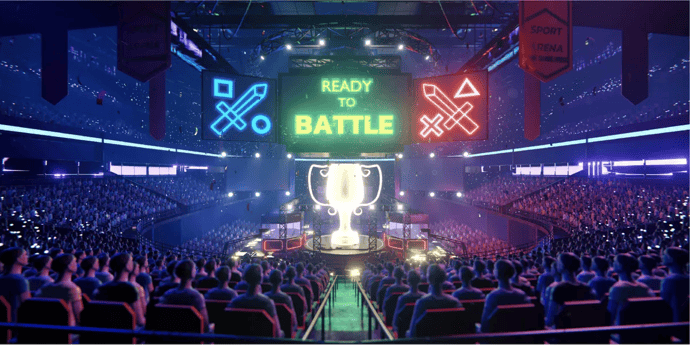
For many local players, the first “tournament” was simply a custom lobby with friends, a borrowed headset, and a phone balanced on a power bank during long evening sessions. Esports was popular, but rarely organized at scale. Fast forward to 2026, that picture has changed dramatically.
The Philippine esports scene is now shaped by structured leagues, formal tournament operators, and a fast-growing professional ecosystem that connects players, schools, brands, and international organizers. What is driving this shift is not just player enthusiasm, but a deeper cultural and digital transformation unique to the country.
Today, esports in the Philippines is no longer a side activity for gamers. It is becoming a recognizable entertainment industry and a realistic career pathway.
Smartphones Put Esports in Every Pocket
The most important driver behind the rise of esports leagues in the Philippines is the country’s strong mobile-first culture.
For many Filipinos, the smartphone is the primary device for entertainment, communication, and digital participation. This has created a natural foundation for mobile esports to grow, without the cost barriers associated with gaming PCs or consoles.
Competitive titles such as:
- Mobile Legends: Bang Bang
- PUBG Mobile
- Honor of Kings
have become the backbone of the local competitive scene.
Among them, Mobile Legends remains the most dominant title nationwide. Its professional competition, MPL Philippines, operates as a long-term franchised league with stable organizations, defined seasons, and full broadcast production.
The result is a uniquely inclusive ecosystem that took over the Philippines. Young players from provincial areas now have the same competitive access as players based in Metro Manila, simply by having a reliable connection and a smartphone.
This accessibility is one of the main reasons the Philippine talent pool continues to grow faster than many neighboring markets. As mentioned before, many Filipinos only have access to mobile phones, not gaming PC’s, which pushes mobile esports more than regular esports.
A Social-First Esports Audience
Unlike regions that rely heavily on centralized streaming platforms, the Philippine esports audience is deeply social and community-driven.
Livestream viewing is closely tied to Facebook communities, local influencers, team pages, and personality-based creators. Many fans follow players first, and teams second. This social layer plays a major role in how leagues build their audience.
The growth of local tournaments has also expanded adjacent industries such as content creation, team branding, match analysis, and digital entertainment services. One area seeing consistent search interest from Filipino users is esports-related betting, including platforms that are offering esports betting Philippines, reflecting how esports is increasingly treated as mainstream spectator entertainment. In the Philippines E-sports betting is legal and regulated under PAGOR, but many Filipinos also use global betting sites.
Unlike smaller or emerging esports markets, the Philippines already benefits from:
- a highly active online fan culture
- strong creator-led engagement
- rapid viral distribution of highlights and live content
This makes new leagues far more sustainable from a visibility perspective.
Education and Institutional Recognition Is Beginning to Align
One of the most meaningful changes in the Philippine esports ecosystem is the gradual involvement of formal institutions.
The national education system, including the Department of Education (Philippines), has begun recognizing esports as part of broader digital skills development and co-curricular initiatives.
While esports is not yet institutionalized at the same scale as traditional sports, schools and academic programs are increasingly using competitive gaming as a tool for teamwork, leadership, and digital literacy.
At the industry level, national esports bodies continue working with tournament organizers, private academies, and international partners to standardize rules, player welfare frameworks, and competition structures.
This alignment is crucial for long-term stability. It reduces the dependency on short-lived community events and allows leagues to operate under more professional and predictable systems.
International Events and Professional Venues
The Philippines is also demonstrating its capability to host high-production live esports events.
Major shows and large-scale entertainment productions are now regularly staged at venues such as the Philippine Arena, one of the largest indoor arenas in the world.
Beyond domestic competitions, tournaments connected to theIESF World Esports Championships have helped position the country as a credible host for international esports operations.
The shift is significant.
The Philippines is no longer only exporting players to regional tournaments. It is increasingly participating as an operational hub capable of supporting global broadcasts, team logistics, and live audiences.
From After-School Hobby to Professional Career
The rapid increase in leagues is not simply about more tournaments. It reflects the professionalization of esports careers in the Philippines.
By 2026, competitive players are increasingly supported by structured team environments that include:
- formal player agreements
- scheduled training and bootcamp programs
- performance analytics and coaching
- media and brand development training
Behind each roster, an expanding professional workforce is forming.
New leagues create sustained demand for shoutcasters, production crews, observers, broadcast engineers, event managers, social media specialists, and data analysts. This ecosystem allows young professionals who may not become pro players to still build careers within esports.
In a country with a young and digitally native population, this diversified career structure plays a major role in esports’ long-term relevance.
The Sponsor Effect in the Philippine Market
Corporate participation has become a defining factor in the current growth phase.
In earlier years, sponsorships were largely limited to gaming hardware and accessories. Today, telecommunications providers, digital wallet services, food and beverage brands, and consumer electronics companies are actively investing in Philippine leagues.
For sponsors, esports offers direct access to a youth-driven, mobile-first, and socially engaged audience.
For organizers, this private investment enables:
- higher and more stable prize pools
- improved broadcast production
- longer seasonal league planning
- stronger retention of top domestic talent
The commercial layer now supports league continuity rather than short-term tournament cycles.
Feature Comparison
| Feature | Past (circa 2018) | Present (2025–2026) |
| Primary platform | PC cafés and home setups | Mobile-first and hybrid live venues |
| Education and institutional involvement | Minimal | Growing school and industry engagement |
| League structure | One-off tournaments | Recurring national franchise leagues |
| Career outlook | Hobbyist | Professional players and esports staff roles |
The Future of Competitive Esports in the Philippines
As the industry moves deeper into 2026, the Philippines is emerging as one of Southeast Asia’s most scalable esports markets.
The country already offers three structural advantages:
- a mobile-native population
- a socially driven streaming culture
- increasing institutional and educational support
With stable leagues such as MPL Philippines, rising international event exposure, and closer collaboration between schools, organizers, and governing bodies, the number of professionally operated esports leagues is expected to continue growing.
However, the true success of Philippine esports will not be measured by tournament counts alone. It will be measured by how effectively the ecosystem can convert grassroots participation into sustainable careers, both on stage and behind the scenes.
For a generation that grew up online, competitive gaming is becoming more than entertainment. It is evolving into a legitimate cultural and economic pathway.
The Philippines has entered its own esports expansion era, shaped by community, mobility, and digital creativity.

Yuriy Sheremet - Expert en jeux mobiles et esports parmi les jeux de tir et MOBA.
À EGamersWorld, Yuriy, comme en 2020 lorsqu'il a rejoint le portail, travaille avec le contenu, bien qu'avec des ajustements à son domaine de responsabilité.


 Codes Roblox pour construire un zoo avril 2026Découvrez tous les codes Roblox Build a Zoo en vigueur - échangez-les contre des pierres précieuses, des billets chanceux et des récompenses gratuites.
 Dima Ostapchuk
 Crimson Desert Best Shields - Ranked List and How to Get S-Tier Gear (en anglais)Un guide complet des meilleurs boucliers de Crimson Desert. Comparez les statistiques de base, découvrez les bonus uniques et trouvez les meilleurs équipements défensifs pour votre personnage.
 Chillplay
 Comment obtenir le Grand bouclier de Rhonide dans le Désert cramoisi ?Vous cherchez le Grand bouclier de Rhonide ? Suivez notre guide du Désert cramoisi pour vous faufiler dans le Manoir Lioncrest et vous emparer de ce bouclier unique qui vous offrira une défense et une mobilité élevées.Chillplay
 LCK CUP 2026 Round 1-2 : Liste complète des équipes de niveauDécouvrez les classements de puissance ultimes pour la LCK Cup 2026 Rounds 1-2. Voyez où se situent Gen.G, T1 et les autres équipes coréennes dans notre liste de classement détaillée, alors qu'elles se battent pour une place à la MSI.Chillplay